


Single Point Diamond Tool | 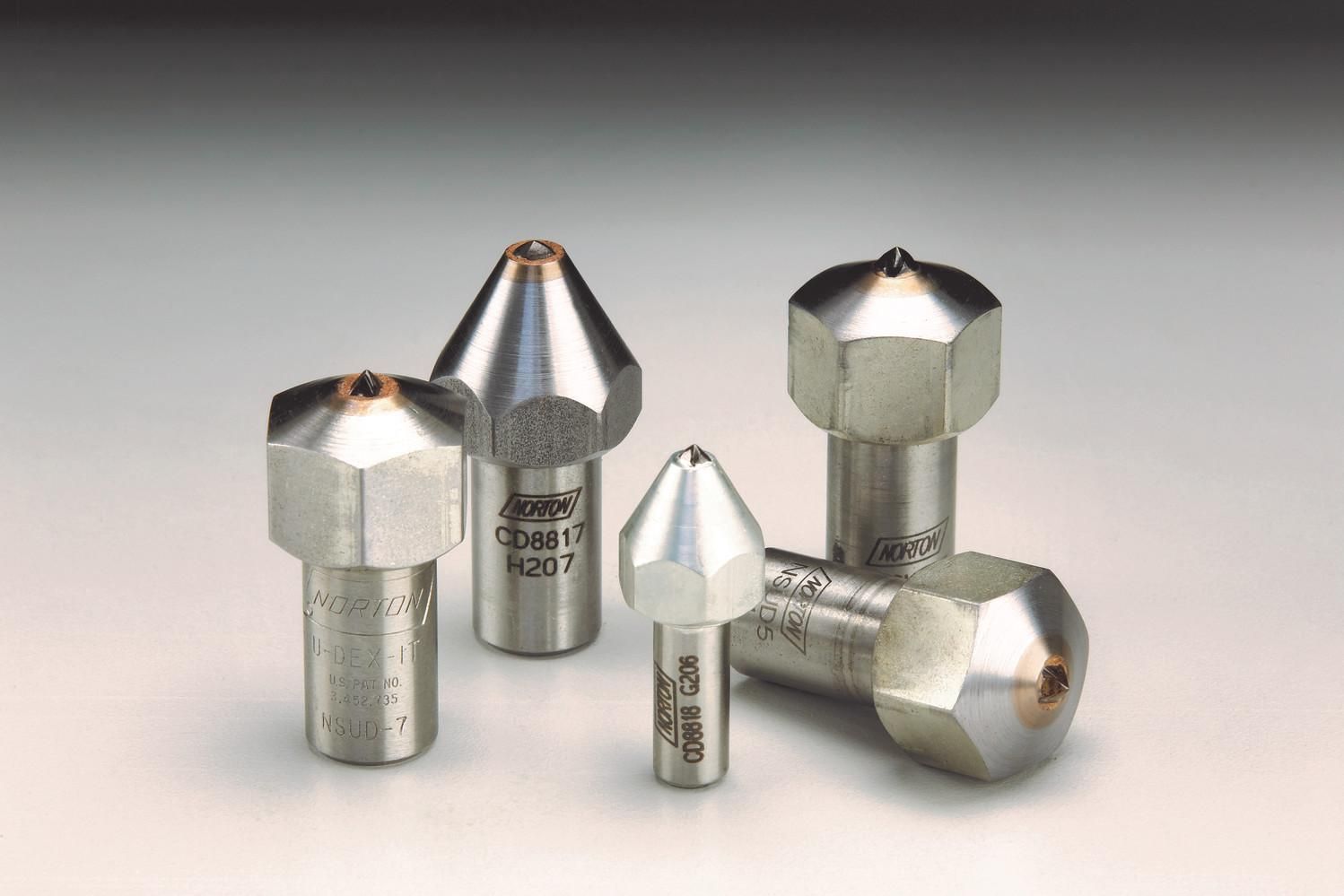
Single Point Indexable Diamond Tools | 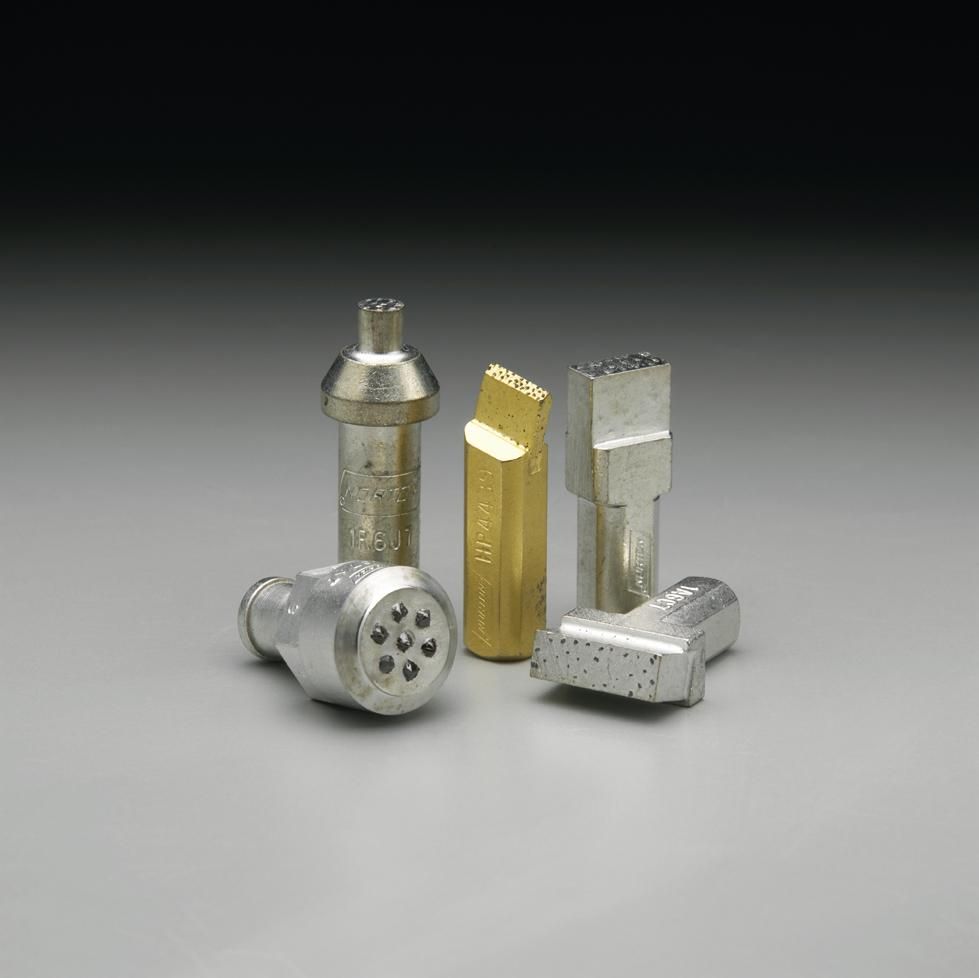
MultiPoint Diamond Tools | 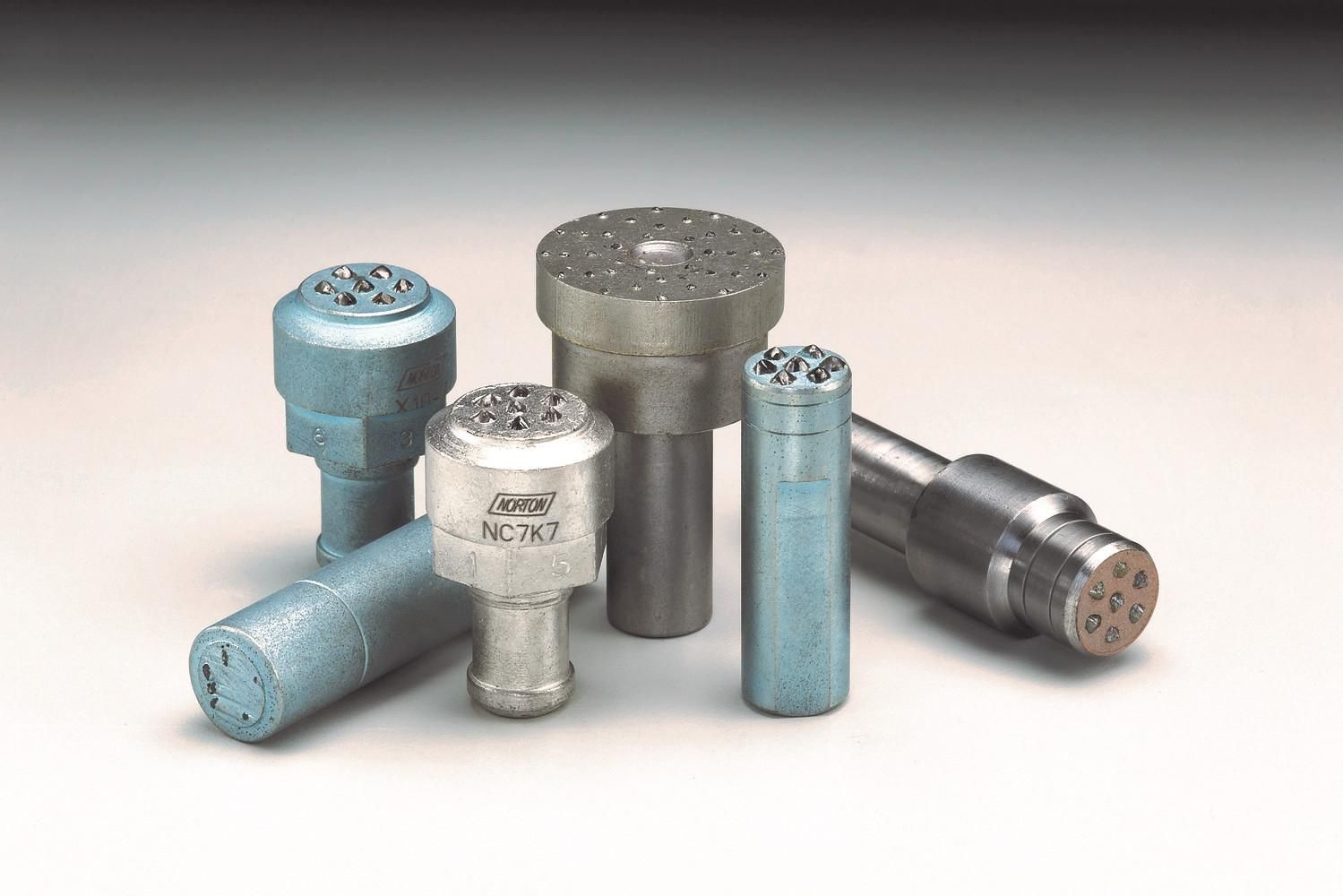
Diamond Cluster Tools |
The market is filled with diamond tool options and not every tool is created equally. The following four questions can be used to help choose the proper diamond tool for your application.
1. Are You Using a Simple or an Intricate Form?
Simple Form
Grit Tool: Long tool life and reduced dressing costs
Intricate Form
Single Point: the metal surrounding the diamond(s) in a grit tool could hit the sides of the wheel, resulting in a form error.
Special form tools with coned or chiseled diamond tips: The diamonds in these tools are lapped in a way that allows you to hit all those small angles and radii in your form. The more intricate your form, the more intricate you need your tool to be.
2. Do You Value Initial Cost or Overall Price?
Non-Resettable Tools
The diamonds only have one settable point and are disposable with a low initial cost. Non-resettable tools are also the most cost efficient option if resetting is not practical.
Resettable Tools
The diamonds used for these tools are higher quality with multiple points suitable for dressing (up to four settable points). Once the diamond has been worn, return the tool to the factory for the diamond to be reset it in a new shank. Although there is a higher upfront cost, resetting the diamond costs a fraction of a new single point tool and yields significant savings over time.
3. What Carat Size Does Your Abrasive Supplier Recommend for the Width and Diameter of Your Wheel?
When it comes to choosing the carat weight for your diamond tool, think about the wheel diameter and width of your machine; the larger these numbers are, the larger the carat weight must be. If you are unsure, follow your abrasive supplier’s guidelines. Using an undersized diamond causes the stones to become superheated, even when grinding wet, which will soften the stone and cause undue wear to your machine and poor wheel conditioning.
4. Are You Concerned About Turning Your Dressing Tools?
Some are reluctant to turn dressing tools, even though it extends the life of the tool, because of the risk of misalignment. Indexable tools solve this problem by not requiring loosening during indexing. This alleviates the risk of misalignment and makes them the tool of choice for many operators. With a two-part construction featuring separate head and shank pieces, it is easy to simply turn the indexable head with a wrench while the tool shank stays in place.
For an in-depth look at dressing solutions, check out our article on optimizing grinding processes with the proper truing and dressing tools. There are a lot of considerations to make when choosing the appropriate diamond tool for your job, but the decision does not have to be intimidating.
Related Articles

Beyond Price: A Technical Approach to Comparing Grinding Wheel Value
See how technical metrics such as G-Ratio, Q' (specific material removal rate), chip thickness, spec...

Setting Expectations
Hear how the Norton Abrasive Process Solutions (APS) program can help you automate your abrasives op...

Proof in the Process
See how the Norton Abrasive Process Solutions (APS) team can help you prove and automate your grindi...

Advanced Automation Answers Demands
Automation is transforming the manufacturing workplace. Learn how it can be used in your facility to...

Assess Your Grinding Process for Better Bottom-Line Results
Material removal rate (MRR) is a crucial parameter in evaluating the efficiency of the grinding proc...

Tips for Improved Surface Grinding
Create the most productive surface grinding process with these grinding wheel selection and paramete...

APS Program's Abrasive Automation Cell Optimizes Manufacturing
Designed to solve material removal and surface generation problems, the Norton Abrasive Process Solu...

5 Grinding Considerations for Improving Surface Finish
See how making adjustments to operational parameters, wheel dressing, grit size, coolant delivery, a...

5 Reasons to Upgrade to Vit-cBN
Learn when to upgrade your cylindrical grinding process and what factors to consider when making the...