


No Short “Cuts” for Safe Grinding
Scenario
You have just used your Norton cutting-off wheel to cut a bolt with your chop-saw and, as usual, the cutting-off operation has left a slight burr on the bolt that needs to be removed. Unfortunately, your bench grinder and portable angle grinder are located on the other side of the shop. Is it OK to use the side of the cutting-off wheel to quickly deburr your part to save some time?
NO! Cutting-off wheels are for cutting on the periphery ONLY. Why?
- Cutting-off wheels are thin by design and do not have adequate lateral strength for side grinding.
- The fiberglass reinforcement is in the wheel to add strength. Using the side of the wheel can damage the fiberglass. This reduces the strength of the wheel and can lead to breakage.
- Regardless of what type of grinding wheel you are using, grinding must only be performed on the surface of the wheel for which it is designed.
Using a cutting-off wheel for side grinding can have serious consequences. The photographs seen here show what can happen to a cut-off wheel when the side is used for deburring or grinding. The workpiece can cut through the reinforcing side fiberglass weakening the wheel. This may result in wheel breakage and injury.
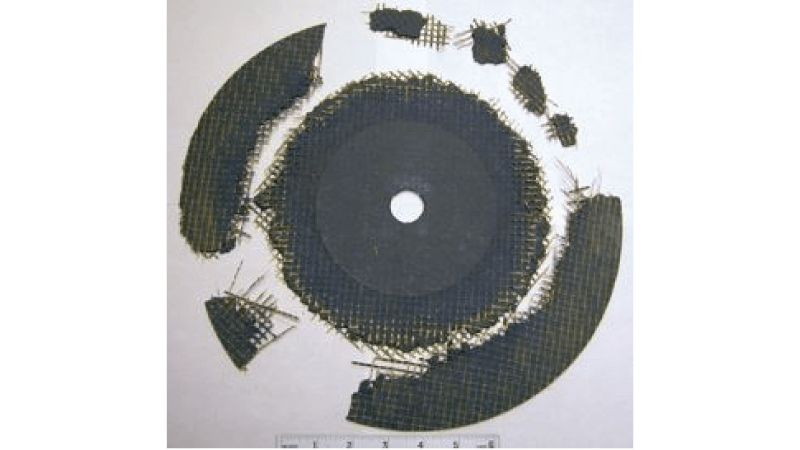
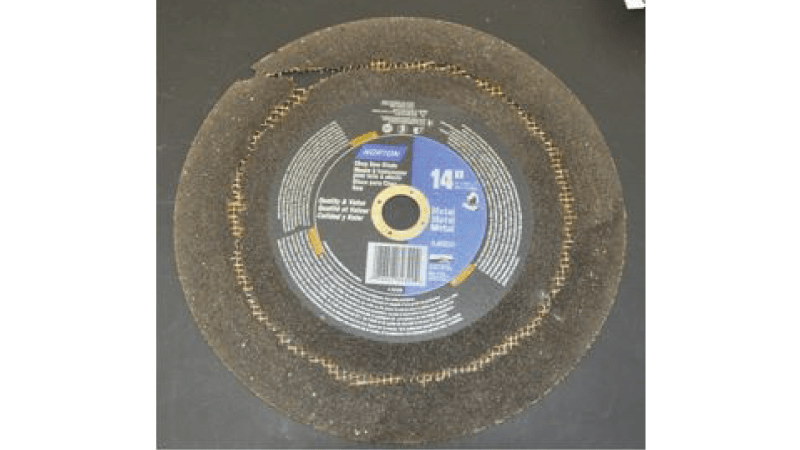
The safety code for grinding and cutting wheels is ANSI B7.1 “Safety Requirements for the Use, Care and Protection of Abrasive Wheels.” The code is very specific defining the proper grinding surfaces for each type of wheel and this illustration shows that the only acceptable grinding surface on a cutting wheel is on the periphery, not the sides.

Don’t take shortcuts with your safety. Be sure to use cutting-off wheels for cutting only.
For additional information on this topic or if you need any other abrasive safety information, please review the Norton Product Safety page, ANSI, OSHA, and all literature provided by the abrasive wheel and machine manufacturer. You may contact the Saint-Gobain Product Safety Department at (508) 795-2317, or contact your Saint-Gobain Abrasives, Inc. representative with any safety related questions.
Related Articles

Angle Grinder Safety Basics
Learn how to safely use an angle grinder, from the abrasive wheel considerations to the role played ...

Using Quick‑Mount Hubs on Portable Grinding Wheels
Learn the benefits of quick-mount hubs and how to safely mount and remove a portable grinding wheel ...

When is a Grinding Wheel Worn Out?
Review this safety information to find out when you need to replace your grinding wheel.

Better Safety Equals Better Profitability: Masonry Saw Safety
Focused on making masonry work safer, Norton recently published this article on best practices for m...
ANSI B7.1 - The Industry Standard for Grinding Wheel Safety
ANSI B7.1 is the industry standard for grinding wheel safety. Learn more about how you can leverage ...

Flanges: A Critical Link in Grinding Wheel Safety
Flanges are critical to safely operating a grinding wheel. See how to ensure flanges are in good con...
Reducing Bushings – Know the Rules
Learn the general rules for using a reducing bushing, as explained in the ANSI B7.1 safety requireme...

Coated Abrasive Fiber Disc Safety
Learn how to properly store your coated abrasive fiber discs to avoid cupping and how to safe when u...

Use Wheel Guards and Face Shields Together to Prevent Facial Injuries
Why risk possible facial injuries when it can easily be prevented?